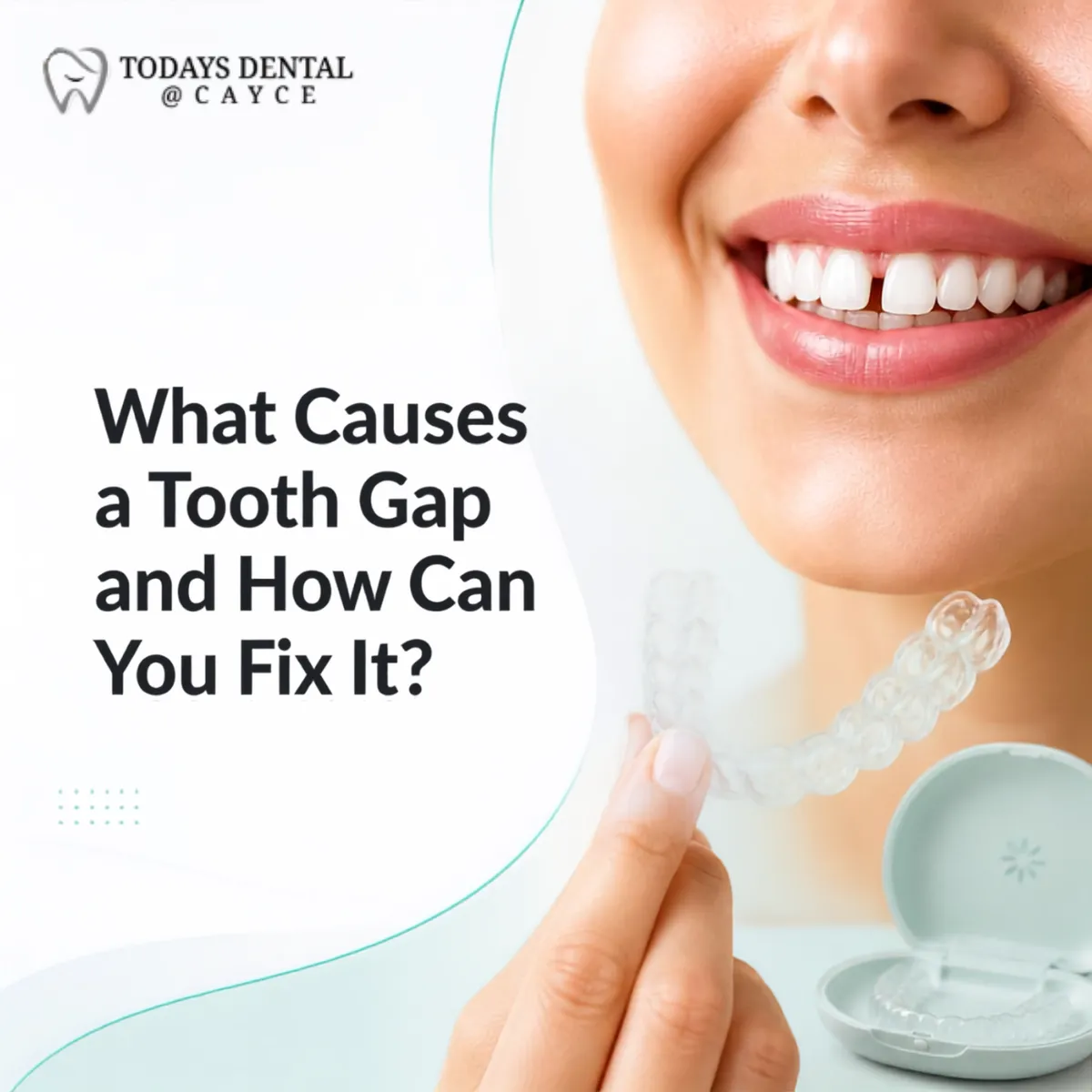
Many people feel self-conscious about a tooth gap when they smile. A gap, or diastema, can change how gapped teeth look and how a person feels about their smile.
A common cause is a low-sitting frenum (also spelled fraenum) — the small band of tissue above the two front teeth — that keeps them apart. Genetics, thumb sucking, tongue thrusting, gum disease, and missing teeth can also cause gaps. This post explains why gaps form and shows clear fixes: orthodontics like braces and clear aligners, cosmetic dentistry like dental bonding and veneers, and surgical care like a frenectomy and gum therapy.
Tooth gaps can arise from several factors. Genetics and childhood habits often lead to misalignment in teeth, causing spaces between them.
Genetics plays a significant role in tooth gaps. Some people inherit jaw structures that are larger than their teeth, leaving noticeable spaces. A low-sitting frenum often contributes by keeping the two front teeth apart. Jaw structure affects how teeth align and fit together, and gaps can create challenges for both dental health and self-confidence.
Thumb sucking and tongue thrusting put steady pressure on the teeth and jaw. Prolonged thumb sucking pushes upper teeth forward and lower ones backward. Tongue thrusting — pressing the tongue against the front teeth while swallowing or speaking — creates gaps the same way over time. Addressing these habits early helps prevent tooth gaps and supports a healthier smile later in life.
Gum disease causes inflammation and loss of the tissue that supports teeth. That loss creates extra space, letting teeth shift and form gaps. Decay or injury can also lead to tooth loss, and the empty space allows surrounding teeth to drift out of alignment. Treating gum disease and maintaining good oral health is crucial for keeping gaps from forming or worsening.
Missing or undersized teeth create extra room in the mouth, and surrounding teeth shift into it. Some people naturally have smaller teeth that do not fill their jaw properly. These gaps can affect a person's smile and confidence — but multiple treatments can close them.
Braces use brackets and wires to exert gentle pressure that gradually moves teeth closer together. Clear aligners are removable trays that straighten teeth without noticeable hardware — a more discreet option. Both work well for gaps caused by misalignment or by missing and undersized teeth.
Dental bonding applies a tooth-colored composite resin that fills small gaps or reshapes teeth with a natural look. Veneers are thin porcelain or composite shells that cover the front surface of teeth, changing their size and shape. Crowns fit over an entire tooth to restore its shape and function. If misalignment is present, orthodontics may be recommended alongside or instead of cosmetic work.
A frenectomy removes the low-sitting frenum that pushes the top front teeth apart. Gum therapy treats the gum disease that creates extra space between teeth — improving overall alignment and often reducing gap sizes significantly.
Diastema means a gap between teeth. Genetics can make gaps more likely, misalignment can push teeth apart, and a large frenum can sit between the front teeth and keep them separate. Gum disease can move teeth and widen gaps, and a tooth extraction or missing tooth leaves a space.
Orthodontic treatment uses planned tooth movement — with braces, aligners, or other appliances — to close spaces. Treatment time varies by case.
Dental bonding fills small gaps quickly while keeping teeth natural. Veneers or crowns can also hide a gap, and implants or bridges replace missing teeth. In some cases an extraction helps prepare the mouth for orthodontics.
See a dentist if a gap grows, bleeds, or causes pain. The dentist will check for gum disease, the frenum, and misalignment, then recommend orthodontics, bonding, or another fix.
Our team at Todays Dental @ Cayce in Cayce, SC can evaluate your gap and walk you through the option that fits your smile and budget. Call 803-233-6141 or book an appointment online today.
A gap between the front teeth, called a diastema, most often comes from genetics and jaw structure, a low-sitting frenum that keeps the two front teeth apart, or teeth that are smaller than the jaw they sit in. Childhood habits such as thumb sucking and tongue thrusting can also push teeth apart, and gum disease or missing teeth may open spaces later in life.
A small gap in a child's smile can close naturally as the permanent teeth come in and the jaw finishes growing. Gaps in adult teeth generally do not close on their own, because the underlying cause, whether jaw size, a low frenum, or bone loss from gum disease, stays in place. A dentist can tell you which situation you are dealing with.
Braces and clear aligners close gaps by applying gentle, steady pressure that moves teeth through the bone into better alignment. Braces use brackets and wires, while clear aligners use a series of removable trays. Both approaches correct the position of the teeth rather than just covering the space, which is why orthodontics is often recommended when several teeth are spaced or the bite is off.
Dental bonding and veneers both close a gap cosmetically by adding width to the teeth on either side. Bonding uses tooth-colored composite resin shaped directly onto the tooth in a single visit, while veneers are thin custom shells bonded to the front surface for a longer-lasting result. The right choice depends on the size of the gap, the condition of the teeth, and your goals.
See a dentist if a gap is widening, if your gums bleed or feel tender, if teeth feel loose, or if the space is affecting how you chew or speak. Those signs can point to gum disease or bite problems rather than a purely cosmetic concern. An exam and X-rays show whether the supporting bone is healthy before any cosmetic or orthodontic treatment begins.
Tell us a little about what you need — we'll be in touch shortly.
1305 Knox Abbott Dr suite 101, Cayce, SC 29033, USA
Hi! I'm Tooth fairy! Your AI Assistant Ask me anything