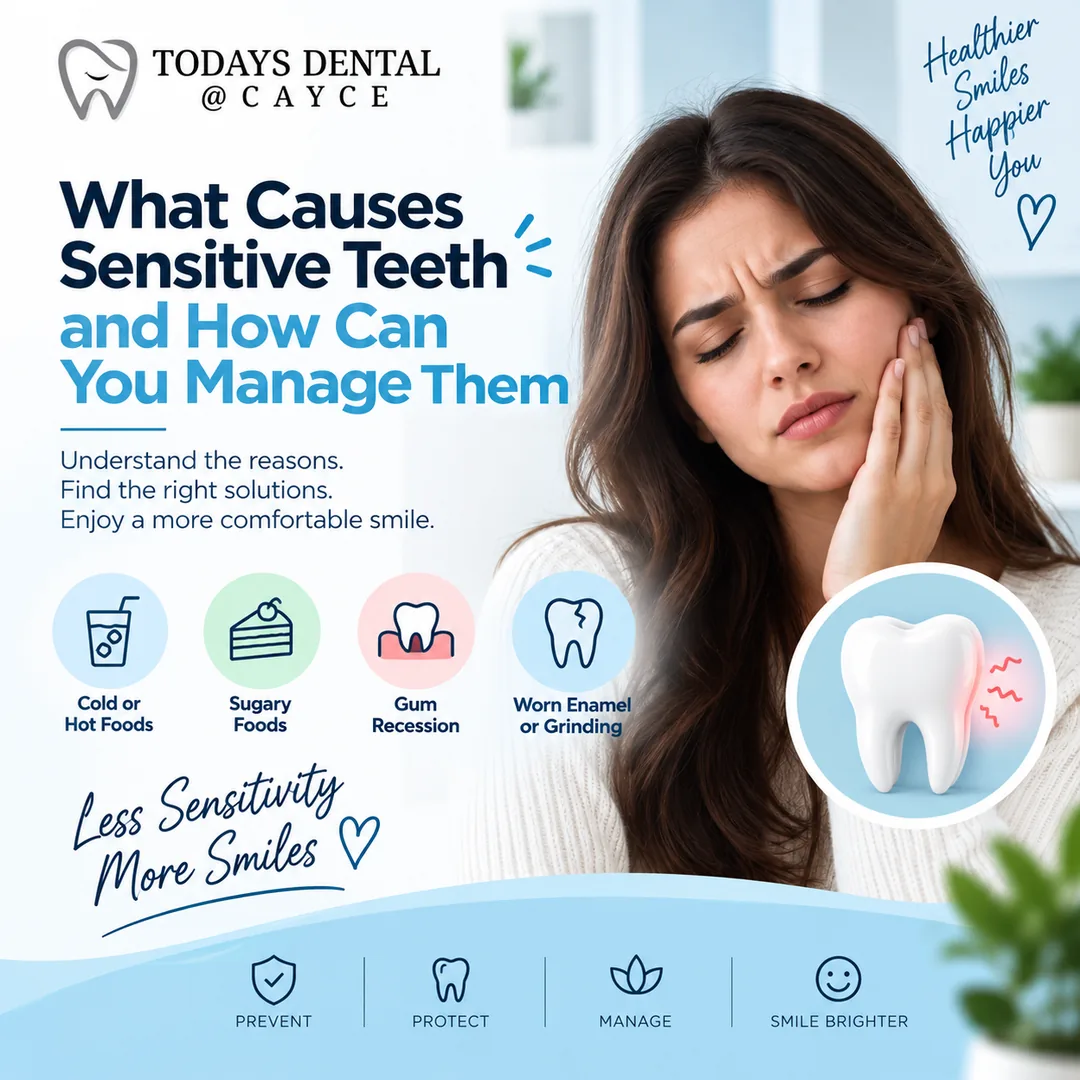
Many people feel sharp pain when they eat or drink hot, cold, or sweet items. They often worry about managing sensitive teeth. This pain can make eating and talking hard.
Tooth sensitivity happens when enamel wears down and dentin shows, so cold sensitivity and pain follow. Gum disease, tooth decay, enamel erosion, tooth grinding, and gum recession also cause pain and sensitive gums.
The guide shows simple oral hygiene tips, pain relief with desensitizing toothpaste, and dental treatments like fluoride or bonding.
Many people experience tooth sensitivity due to various factors. Worn enamel, gum recession, and certain foods can all contribute to this uncomfortable condition.
Worn enamel can lead to sensitivity in teeth. Over-zealous brushing damages the enamel layer and exposes dentin, which causes pain from hot or cold foods. Harsh habits, like using hard toothbrushes or aggressive scrubbing techniques, also contribute to this issue.
Poor oral hygiene makes matters worse by increasing the chance of gum disease and tooth decay. Individuals who experience tooth sensitivity often find that ice cream or a hot drink triggers discomfort due to this enamel erosion.
To manage sensitive teeth effectively, one must consider options like desensitizing toothpaste and gentle brushing methods.
Tooth sensitivity often arises from gum recession and exposed roots. Gum disease can lead to gum recession, which uncovers the tooth roots. This exposure makes teeth more vulnerable to pain.
Dentin lies beneath the enamel and reacts strongly to hot or cold stimuli. Those with exposed roots may experience sharp discomfort when consuming ice cream or sipping a hot beverage.
Poor oral hygiene plays a significant role in these issues. Without proper care, plaque builds up along the gums, harming dental health over time. Tooth decay also exacerbates sensitivity by eroding enamel further.
Patients who have experienced this firsthand often report that certain foods trigger their tooth pain unexpectedly as they bite down on them. Treatments like desensitizing toothpaste can help manage sensitivity by providing relief for those affected by these conditions.
Teeth grinding, known as bruxism, often leads to sensitive teeth. This habit wears down enamel and exposes dentin. As a result, individuals might feel pain when consuming hot or cold foods. Grinding can also cause cracked or broken teeth, further increasing sensitivity.
Dental procedures can contribute to tooth discomfort as well. After treatments like root canals or extractions, many people experience heightened sensitivity. Poor oral hygiene may lead to gum disease and tooth decay that intensifies this issue. Taking care of dental health is essential in managing sensitivity effectively.
Acidic foods and drinks can harm tooth enamel. Citrus fruits, soda, and wine erode enamel over time. This erosion exposes the sensitive dentin underneath. People with sensitive teeth often feel pain from hot or cold stimuli due to this exposure.
Dental issues also play a major role in tooth sensitivity. Gum disease leads to gum recession. Receding gums expose tooth roots, which increases discomfort. Poor oral hygiene worsens these problems by allowing tooth decay to develop.
Those who experience significant sensitivity should consider their diet and oral care habits seriously for better dental health management.
To manage sensitive teeth effectively, people can try using desensitizing toothpaste and practice gentle brushing techniques. These simple steps help reduce discomfort and improve dental health.
Desensitizing toothpaste helps people with sensitive teeth. It contains ingredients that block pain signals from reaching the nerves in the teeth. Regular use can reduce discomfort caused by hot, cold, and sweet foods.
Gentle brushing is just as important. Overzealous brushing can lead to enamel erosion and gum recession, which expose the dentin layer of the tooth. This exposure increases sensitivity and discomfort.
Choosing a soft-bristled toothbrush can prevent damage to both enamel and gums. Brushing too hard makes sensitivity worse; it’s crucial for individuals to adopt a gentle touch during their oral care routine.
Combining desensitizing toothpaste with proper brushing techniques offers effective pain management for those with tooth sensitivity issues.
Acidic foods and drinks can trigger tooth sensitivity. Citrus fruits, soda, and vinegar-based dressings erode enamel. This erosion exposes dentin, leading to pain from hot or cold stimuli. To minimize discomfort, it's wise to limit these acids in the diet.
Protective dental devices also help manage sensitive teeth. A dentist can fit individuals with mouthguards to shield their teeth from grinding during sleep. These devices prevent further damage and reduce sensitivity over time. Proper oral hygiene remains crucial for maintaining overall dental health as well.
Fluoride treatments can help strengthen tooth enamel. Dentists apply fluoride directly to sensitive areas, making teeth less painful. Bonding works well for cracked or broken teeth. The dentist uses a tooth-colored resin to cover exposed dentin and protect nerves.
Sealants offer another solution by coating the chewing surfaces of back teeth. This protects against decay and reduces sensitivity from acidic foods and drinks. Many people notice pain relief after these procedures. Regular visits to the dentist can ensure better oral hygiene and overall dental health.
Sensitive teeth can signal deeper issues that need attention. Painful reactions to hot, cold, or sweet foods often indicate problems like gum disease, tooth decay, or worn enamel. Dentin exposure is a primary cause of discomfort; it results from enamel loss and may lead to worsening sensitivity.
Individuals should seek dental care if they experience persistent pain or sensitivity after dental procedures such as root canals or extractions. Cracked or broken teeth can contribute to increased sensitivity and demand immediate evaluation.
Poor oral hygiene also plays a significant role in the development of sensitive teeth; neglecting dental health practices could worsen the condition over time. Consulting with a dentist helps address these concerns effectively and ensures proper treatment for better oral health.
Tooth sensitivity happens when enamel wears down and dentin becomes exposed. Exposed dentin lets stimuli reach the nerve and cause pain. Gum disease and tooth decay can also expose dentin and raise sensitivity.
Enamel covers and shields the dentin. Dentin sits under the enamel and links to the nerve. When enamel erodes, dentin sends signals that cause sharp pain from hot, cold, or sweet.
Keep good oral hygiene by brushing gently and flossing daily. Use desensitizing toothpaste and avoid acidic foods. See your dentist for treatment, like fluoride or other restorative care, if pain continues.
Practice strong oral hygiene to prevent tooth decay and gum disease. Use a soft brush and mild paste. Cut back on sugar and acid. Get regular dental checkups for early detection and prevention.
Tell us a little about what you need — we'll be in touch shortly.
1305 Knox Abbott Dr suite 101, Cayce, SC 29033, USA

Hi! I'm Tooth fairy! Your AI Assistant Ask me anything