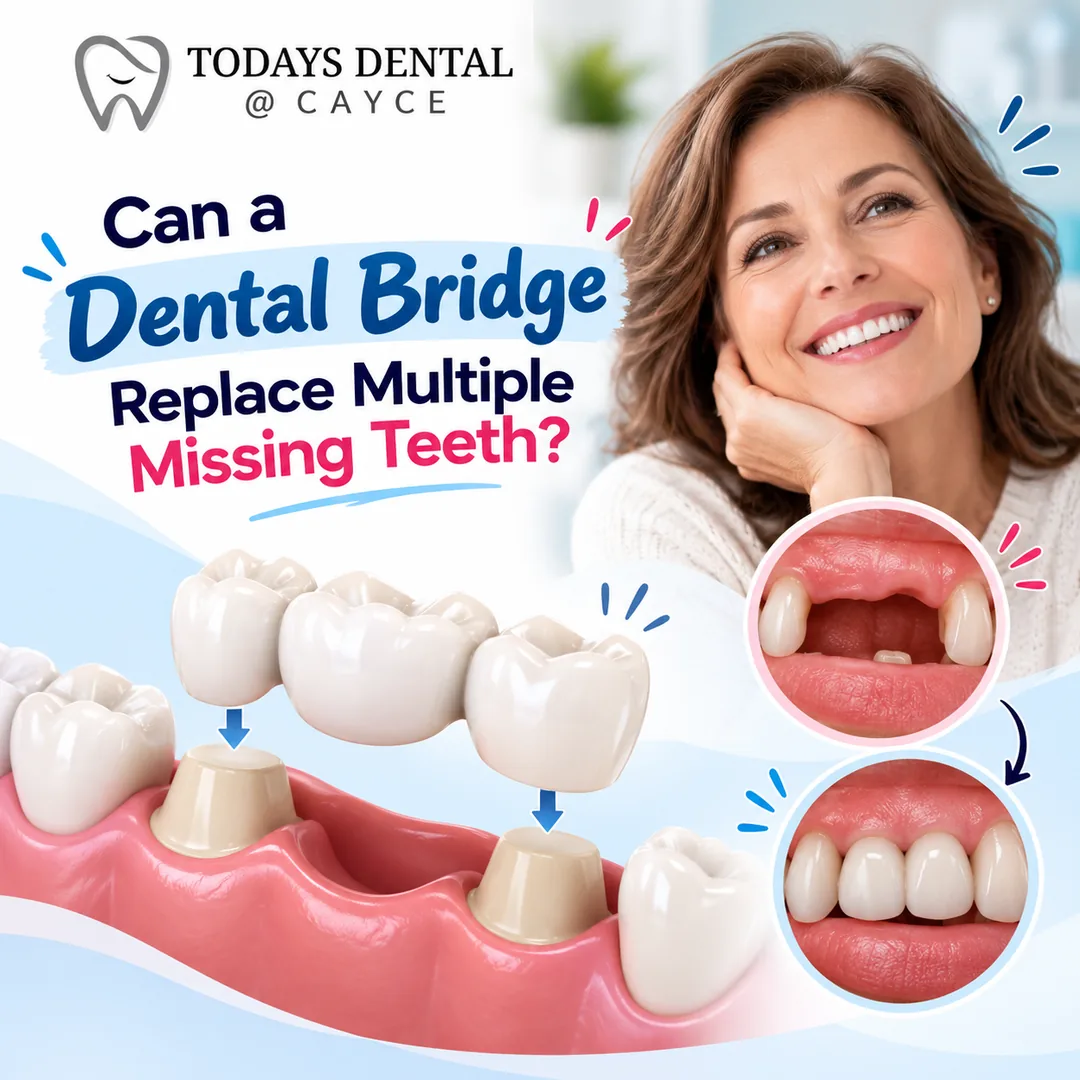
Missing teeth can make eating and smiling hard. Many people ask, can a dental bridge replace multiple missing teeth? A missing tooth acts like a missing link in a chain, and that can shift bite and change speech.
A key fact, a traditional bridge can replace one to three missing teeth if the adjacent teeth are strong enough.
A dental bridge can replace one to three missing teeth most often. Traditional fixed bridges use crowns on adjacent teeth to hold a pontic in place. Clinicians may extend a bridge to replace up to four teeth in a row, but that increases stress on the abutment teeth and can shorten the lifespan of the restoration.
Implant-supported bridges use two or more dental implants to support several pontics. They can replace three to six teeth, and with enough implants they can restore an entire arch.
Implants give more stability than relying only on adjacent crowns, and they help preserve oral health by reducing bone loss. A dentist or prosthodontist can recommend the right option based on bite, bone, and overall goals.
Dental bridges come in different forms to meet varying needs. Each type offers a unique way of restoring multiple missing teeth while ensuring stability and function.
A traditional bridge uses crowns on adjacent teeth to hold a false tooth, called a pontic. The dentist recalls fitting a three-unit fixed bridge to replace one missing tooth, using two crowns on healthy neighbors.
Labs craft the bridge from porcelain or metal fused to porcelain. The process takes two or three visits, including tooth prep, impressions, and cementation.
Patients often pick this tooth replacement for speed and lower cost than implants. Studies and clinical reports show bridges last about five to 15 years with good care. The dentist noted that bridges can replace up to two or three missing teeth between strong abutments, but they can stress adjacent crowns. Some people accept that tradeoff to avoid surgery and implant timelines.
After comparing traditional bridges, implant-supported bridges offer a stronger option. Dentists place dental implants and attach crowns that hold one or more pontics.
One dentist recalls placing two implants to replace three missing teeth in a back bite. The fixed bridge gave clear stability and kept adjacent teeth intact. Patients report easier chewing and better bite alignment.
The pontic sits on implants, so the dentist avoids filing healthy neighbor crowns. Some patients joke they forget the bridge is there, which says a lot about comfort.
A dental bridge offers several benefits, like improved stability and better bite alignment. However, it does have some drawbacks, such as the need to alter adjacent teeth for crowns.
Dental bridges provide an effective way to restore smiles by replacing multiple missing teeth. They can improve both function and appearance. Here are the benefits of choosing a dental bridge:
Each of these advantages makes dental bridges an appealing choice for those dealing with gaps in their smiles due to missing teeth.
Replacing multiple missing teeth with a dental bridge offers a solid solution, but it has its drawbacks. Weighing the pros and cons helps in making an informed decision.
Moving forward, understanding options like dental implants compared to bridges can clarify choices further.
This section compares dental bridges to multiple implants.
| Criteria | Dental Bridge | Multiple Dental Implants |
|---|---|---|
| How many teeth | Typically replaces one to three adjacent teeth. Uses crowns on neighboring teeth as anchors. May require longer spans in select cases. | Can replace several teeth in a row. Uses implants as supports. Fewer implants can support a multi-tooth prosthesis, often two to four for a full arch. |
| Procedure time | Treated in weeks. Preparatory work, impressions, and fitting fit into short timelines. No surgery when natural abutments suffice. | Often takes months. Surgery, healing, and implant integration take time. Bone grafts add weeks to months. |
| Invasiveness | Non-surgical if teeth are healthy. Requires altering adjacent teeth. Less invasive initially. | Involves oral surgery. Implants go into the jawbone. More invasive up front. |
| Bone health | Does not stop bone loss at the missing site. The surrounding bone may shrink over years. | Stimulates and preserves jawbone. Helps maintain facial structure. Preferred for long-term bone health. |
| Longevity | Lasts about 5 to 15 years. Wear, decay, or problem with abutments causes replacement sooner. | Can last 20 years or more with care. Prosthetic parts may need service, but implants often persist. |
| Cost | Lower upfront cost. Often covered partially by dental plans. Replacement costs accumulate over time. | Higher initial cost per implant. Often seen as cost effective long term. Insurance coverage varies widely. |
| Maintenance | Needs careful cleaning beneath the pontic. Regular dental checkups are vital. Adjacent teeth carry added risk. | Care resembles that for natural teeth. Floss and clean around implant abutments. Professional exams remain important. |
| Ideal candidates | Best when neighbors are strong. Good for patients who want faster results. Useful if surgery is not an option. | Recommended for patients with good bone or who accept grafting. Best for long-term oral health goals. Strong general health helps healing. |
| Risks | Risk to adjacent teeth, such as decay or sensitivity. Pontic hygiene can be tricky. | Risk of infection, implant failure, or graft complications. Surgical risks depend on health and smoking status. |
| Cost example | Single-span bridge, average cost $1,500 to $5,000. Regional variations apply. | Single implant, average cost $3,000 to $6,000. Full-arch implant bridges vary widely, often $20,000 plus. |
| Decision tips | Choose when time and budget matter most. Pick when adjacent teeth need crowns anyway. Ask about long term plans. | Choose when bone health and longevity matter most. Consider implants when willing to invest in lasting results. Discuss grafting and timeline with a clinician. |
Yes, a dental bridge can replace multiple missing teeth. It connects two or more crowns on either side of the gap, filling it in with artificial teeth.
Getting a dental bridge typically involves an initial consultation and some preparation of surrounding teeth. Your dentist will take impressions to create a custom fit for your new bridge.
Like anything else, there are pros and cons. A dental bridge may require adjustments over time, and you might need special care to keep it clean and healthy.
Dental bridges can last many years with proper care; often they hold strong for 5 to 15 years or even longer depending on your oral hygiene habits and regular check-ups with your dentist.
Tell us a little about what you need — we'll be in touch shortly.
1305 Knox Abbott Dr suite 101, Cayce, SC 29033, USA

Hi! I'm Tooth fairy! Your AI Assistant Ask me anything